Fairfield Beach Case Studies, Fairfield CT Beach Area, Fairfield CT Behind the Scenes, Real Estate Negotiations
Dear Neighbors, Our new beach area neighbor will be here soon!
Here is the story…
Your Neighbor Called Me Looking to make a move and wanting to maximize the value of their home.
We Got To Work Developed and implemented a targeted strategy for marketing and selling their home.
A Buzz-Worthy Launch Upon listing their home, we attracted 62 buyers. (You may have met me at an open house!)
Results in Record Time Contracts were signed in 49 days while the average market time for similar homes was 68 days, and the sellers achieved the excellent ROI they desired.
Impactful Marketing & Negotiation From marketing, showings, negotiations, and inspections, I collaborated with my clients and managed the process to achieve their best possible outcome!
So let’s congratulate Jennifer, Ken and their son and daughter who we’ll still see at all the same gatherings, and welcome our new neighbors, Jennifer, Zak, and their two little boys and little girl who will be our new beach area neighbors at the end of the month!
Key Strategies Implemented
Guided the sellers to optimize presentation of their home through staging, and updating a couple of light fixtures. We worked together to compile key assets to highlight, such as the phenomenal Fairfield Beach location and its walkability, the pool with lots of fun features, tons of space, landscaping and privacy.
Enlisted top photographers and videographers to capture the ‘picture perfect product’ and location, especially from above, given the vicinity to Fairfield’s Penfield Beach.
Contacted my vast network to get the word out fast.
Collaborated with a neighborhood eatery called Malibu Taco to create an incentive for buyers to visit the open house and talk about their favorite features in return for a free drink there.
Sent a letter to the neighbors announcing the listing.
Hosted broker tours, open houses, and showings, and even went door to door with a personal invitation to the nearby neighbors to the open house!
Published short clips on social media showcasing key features, wrote a blog post, and, of course shared the listing all over the web!
Romantic photo collage depicting a warm, cozy, and aspirational lifestyle for the months to come!
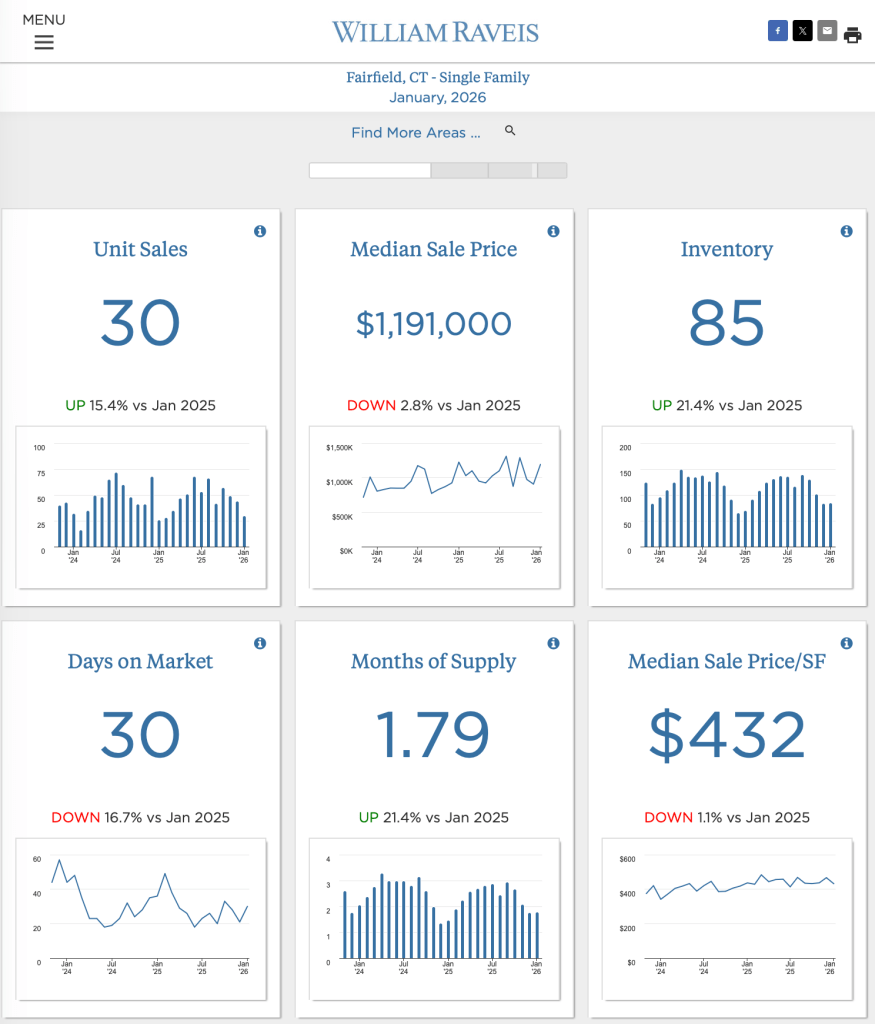
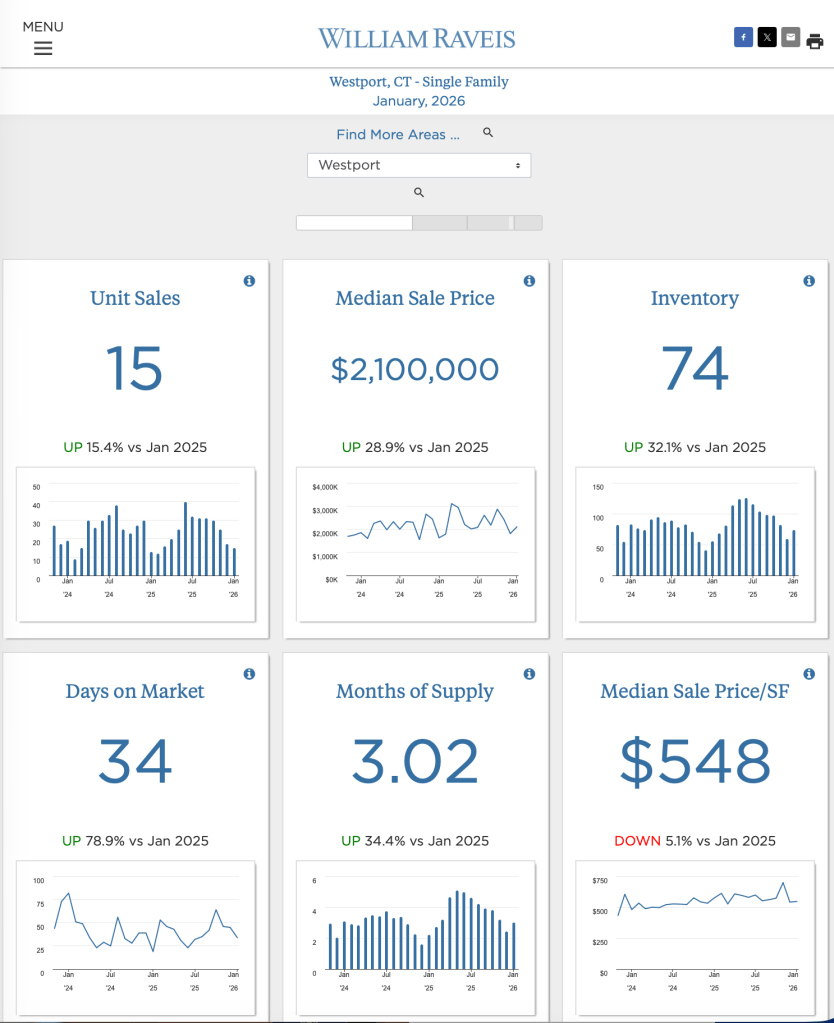
Happy February! Here’s a summary of where we are in the Fairfield and Westport CT single-family markets in January 2026 compared to a year ago.
January2026 Takeaways 😉
In Fairfield, the market still favored sellers due to very low inventory with just 85 houses for sale and less than two months of supply. The average time on market was 30 days to contract. Ninety-three percent of the homes sold for at least 95% of asking, and sale prices averaged 101% of the list price showing sustained buyer demand.
In Westport, the seller’s advantage also continued, though increased inventory and market time hinted at a potentially more balanced market to come. Housing inventory was up 32% from the previous year, and the months of supply was more than 34% higher than in January of 2025. Days on market averaged 34, a nearly 80% increase over the prior year. Sale prices averaged 102% of asking. Eighty-seven percent of homes sold for an average of 95% or more of the asking price.
Sales Were Up
January 2026 sales were up 15% from January 2025. This is in response to the drop in interest rates from the seven percent range to the low-mid six percent range, coupled with pent up buyer demand, and a bit more choice coming to the market.
The Opportunities… ✅
Rates are down with the 30-year fixed conforming mortgage rateat 6% and the jumbo rate at 5.875% at the time this was written. William Raveis Mortgage also offers adjustable rate mortgages (ARMs) with rates in the low-five percent range.
Chief economist for the National Association of Realtors, Lawrence Yun, emphasizes that the current interest rates are the lowest in three years.This means mortgage affordability is up!
Sellers entering the market now still benefit from low competition. The spring market begins to escalate after the Super Bowl!
If you are looking to buy and worry about coordinating your sale with finding your new home, you can protect yourself in the transition when you list your house “subject to finding suitable housing”. This means you are under no obligation to sell your house until you have found the new home.
Another option is to sell your house and rent it back until you’re ready to move. This puts cash in your pocket and positions you as a strong buyer.
You can also request a long closing to give you time to find and close on your new home. Additionally, it’s possible to buy before your sell with a bridge loan. Talk to your agent about a strategy that works best for you. Putting your house on the market enables you to be a competitive buyer while expanding the housing choices for everyone out there shopping for a home!
Buyers, depending on the competition for the home you are bidding on, you may face multiple offers or you could have leverage to negotiate. Remember to have your budget set, down payment saved, and credit score in good order. Avoid taking out other loans or financing other large purchases when preparing to finance a home! If you see something you like, be prepared to have your agent submit a complete and competitive offer including your pre-approval or proof of funds. If you need to sell your house first, talk to your agent as soon as possible to determine your strategy.
Contact your agent to help you plan for your new home this year! 🏡 💫
More Action Items
Secure regular updates: new listings, price changes, local market insights, and mortgage rates.
Want to feel confident in your buying and selling decisions? You will be when you understand today’s market and navigate it with intention.
As we navigate daily life, juggling work, travel, family and life balance—it’s completely normal to feel overwhelmed by all the noise. Headlines about interest rates, housing shortages, national trends, economic uncertainty… it’s a lot.
And if you’re like many, you’ve asked whether right now is a good time to buy, sell, invest, or simply stay put. These questions are on more common than you would think, especially in dynamic markets like Fairfield and Westport, CT.
But the reality is-
It’s not the market that determines certainty. It’s your understanding of the market that does.
Just like daily life, the housing market is full of fast-moving changes, mixed messages, and big decisions. But the people who feel confident in any season are the ones who:
Know what the trends and current landscape actually look like
Understand how supply, demand, and pricing are behaving in their neighborhoods of interest
Have a clear strategy that aligns with their personal timing and goals with the market at hand
That’s where your advantage lies.
Why Real-Time Local Market Data Matters More Than Ever
National news can make the broad market feel unpredictable, but real estate is hyper-local. What’s happening in your town, your neighborhood, your price point, and your style of home tells the real story.
That’s why I’ve created live, real-time market reports for:
Fairfield
Westport
Milford
Popular neighborhoods with in these towns, and more being added.
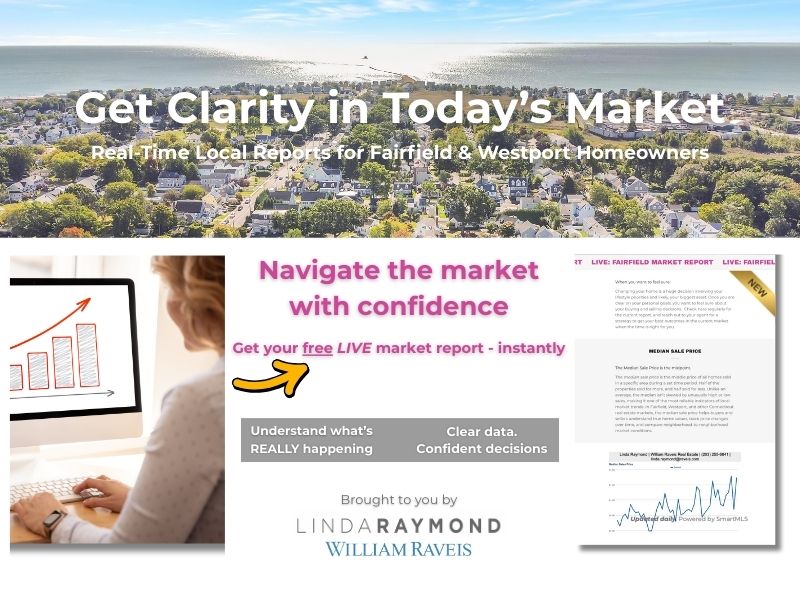
These trend reports update automatically and show the metrics that matter—home prices, inventory, demand, pending sales, days on market, and more. No delays. No guesswork.
Knowledge = Confidence
When you understand the local market conditions, decisions become clearer, timing becomes simpler, and opportunities become easier to recognize.
Your Personal Strategy Starts With Understanding the Market
Whether you plan to sell in the upcoming season, explore downsizing, consider upsizing to meet lifestyle changes, or watch for buying opportunities—your strategy should be built on today’s data, not yesterday’s headlines.
This is how you stay ahead:
Track your town or neighborhood with real-time reports
Reach out to discuss your goals
Together, we build a strategy based on facts, not uncertainty
Access Your Real-Time Local Housing Market Trend Report Today – Free
I invite you to get the real-time market report for the area(s) that matter most to you.
Image: Nostalgic collage of romantic flowers, family photos, and a cozy home in the snow.
Happy Holidays! 🎁 Enjoy adding the December market update to your wintery mix!
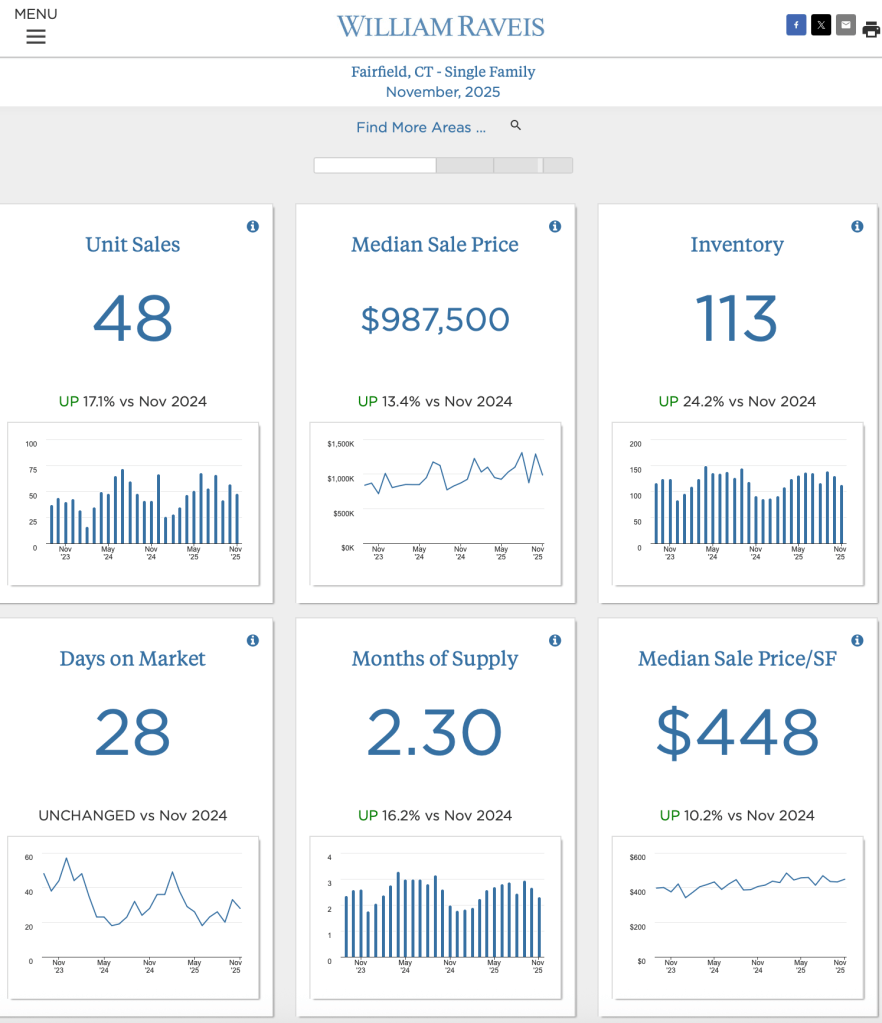
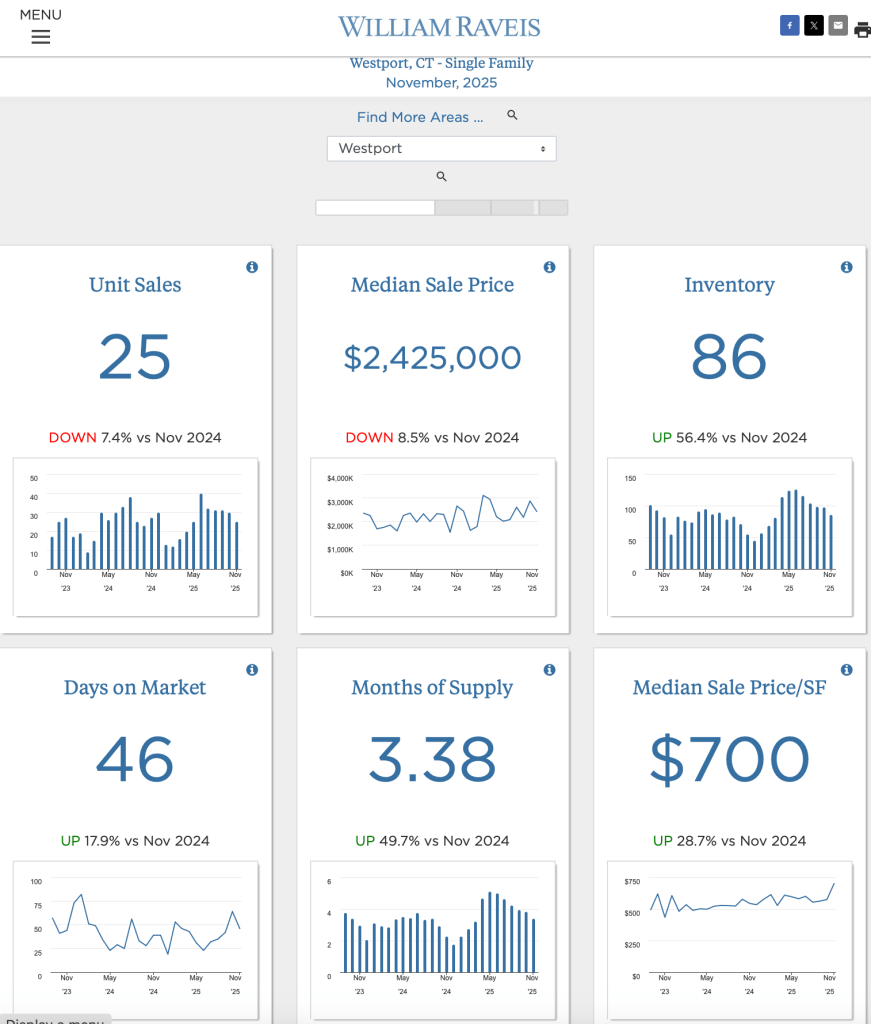
As we embrace cherished memories and prepare to make new ones with family and friends, now is also a great moment to reflect on our local markets and the opportunities ahead! Here’s a summary of the Fairfield and Westport CT single-family markets in November 2025 compared to a year ago. Do you think a shift is happening?
November2025Takeaways 🤓
In Fairfield sales were up and so were the inventory and months of supply. The median sale price and price per square foot were also up compared to last year, while the market time was unchanged. Ninety-two percent of the homes sold for at least 95% of asking, with sale prices averaging 101.5% of asking (up slightly from 100% last year).
Westport
In Westport sales were down from a year ago, while the inventory, months of supply, and market time were up. The median sale price was down from a year ago, and also down from last month. Sale prices averaged 95% of asking, down from 100% last November. Seventy-two percent of homes sold for 95% or more of the asking price (same as last month).
November sales reflect activity in October, when many try to complete their moves before the holiday season approaches. Fairfield’s market did reflect a flurry of activity, while the market in Westport slowed both in unit sales and market time, which averaged a month and a half. The months of supply in both towns remained well below six, indicating a market still in favor of home sellers. Although many sellers still enjoyed top sale prices and multiple offers, many buyers were able to negotiate prices below the list price.
The Opportunities… 🥳
Rates are down with the 30-year fixed conforming mortgage ratedown to 6.125% and the jumbo rate at 5.750% at the time this was written. William Raveis Mortgage also offers adjustable rate mortgages (ARMs) with rates in the 4-5% range. This means mortgage affordability is up!
Sellers entering the market now still benefit from home appreciation and relatively low competition. If you are also looking to buy but worry about finding your new home, you have options to protect your transition when you list your house for sale. You are protected when you list your house for sale “subject to finding suitable housing”. This means you are under no obligation to sell your house until you have found the new home to move into. Another option is to sell your house and rent it back until you’re ready to move. This puts cash in your pocket and positions you as a strong buyer. You could also request a long closing to give you time to find your new home. It is also possible to buy before your sell with a bridge loan. Talk to your agent about a strategy that works best for you. Listing your house soon will enable you to be a competitive buyer and add one more home to choose from for everyone out there shopping for a home!
Buyers, depending on the competition for the home you want to pursue, you may face multiple offers, or you may have leverage to negotiate. Increased inventory and longer market times work in your favor. If you see something you like, be prepared to submit a complete and competitive offer including your pre-approval or proof of funds. If you need to sell your house first, talk to your agent as soon as possible to prepare your strategy.
Contact your agent if you’re dreaming of a new home this season! 🎁 🏡
More Action Items
Sign up for updates: new listings, price changes, local market insights, and mortgage rates.
At midlife, many of us begin to feel that our environment no longer aligns with who we’ve become. A relocation isn’t just about changing a street address—it’s about reshaping your way of being: where you live, how you work, and what you aspire to next. Research shows that moving at this life stage can open fresh habits, renewed purpose and better alignment between lifestyle and career.
Major Takeaways
Midlife is your moment. A move during this phase can serve as a strategic reset—offer a new home that fits your evolving self, pick a neighborhood that reflects your future rhythms, and make real estate decisions that support your personal and professional growth.
Real Estate & Lifestyle: Practical Considerations
To make the move count, choices matter. Consider:
● Location: Are you close to transit, nature, culture hubs? That daily rhythm will shape your life. Consider Fairfield, Connecticut, for example.
● Layout & maintenance: A single-level house, smaller footprint, less upkeep may support flexibility and freedom. Consider temporary storage to lighten the load when making a transition.
● Budget and tax clarity: Midlife moves often coincide with lifestyle shifts—know the cost of living, property taxes and long-term affordability.
● Neighborhood vibe & community: The place you land should match the values and habits you’re cultivating now—not just the past.
● Career & growth alignment: Whether you’re pivoting in job, returning to education, or consulting remotely, choose a home and locale that support those ambitions.
How-To Checklist: Mapping Your Midlife Move
● Clarify your “why” — write three reasons you’re relocating.
● Audit your current lifestyle — list what works, what doesn’t.
● Visit target neighborhoods — stay 1–2 nights, see the rhythm.
● Workout the finances — consult with a trusted lender to discuss down payment, taxes, HOA, cost of living.
● Match the home to your future self — list must-haves (structure, light, flexibility) vs nice-to-haves.
● Set a 90-day plan post-move — attend a class, volunteer, host a dinner.
● Review at 6 months — how’s it fitting? What tweaks are needed?
As part of your midlife relocation, consider re-entering education to sharpen your skills or redefine your career path. Whether you’re earning new credentials or deepening expertise, going back to school can reinforce the fresh start. Online degree programs make it easier to juggle your job and keep up with your studies.
FAQ
Q: Isn’t moving in midlife risky? A: It can feel risky, but many people in their 40s, 50s, and beyond are making thoughtful moves and finding new alignment—not just change. (Careerminds) (Next Chapter Magazine)
Q: Should I sell my current home first or buy then sell? A: It depends entirely on your market, finances, and emotional readiness. Some benefit from renting in the new area first to test the environment.
Q: How do I build new social ties in a new place? A: Actively show up. Volunteer, attend local events, join local clubs. Belonging is built by presence and connection, not by default.
Product Spotlight If you’re redesigning how you plan and live, consider using a LifePlanner, a customizable weekly/monthly planner that helps you track moving tasks, lifestyle goals and routines. It’s a fitting tool when you’re orchestrating a major life shift and want intentional structure.
Relocating in midlife isn’t about starting over—it’s about starting better. When you align where you live with who you are becoming—physically, socially, professionally—you unlock a lifestyle that’s more meaningful, manageable and exciting. Choose the right home in the right neighborhood, weave in your career or learning ambitions, and lean into the community you want to build. The address isn’t everything—but the right one can make all the difference!
By Guest writer, Sharon Wagner and Connecticut Realtor, Linda Raymond, William Raveis Real Estate
You Will Be When You Understand Today’s Market and Navigate It With Intention.
As we navigate Thanksgiving weekend—a time when everyone is juggling travel, family, shopping, and the early holiday rush—it’s completely normal to feel overwhelmed by all the noise. Headlines about interest rates, housing shortages, national trends, economic uncertainty… it’s a lot.
And if you’ve been wondering whether right now is a good time to buy, sell, invest, or simply stay put, you’re not alone. These questions are on everyone’s mind this time of year, especially in dynamic markets like Fairfield and Westport, CT.
But here’s the truth:
**It’s not the market that creates certainty.
It’s your understanding of the market that does.**
Just like holiday shopping, the housing market is full of fast-moving changes, mixed messages, and big decisions. But the people who feel confident this season are the ones who:
Know what the current landscape actually looks like
Understand how supply, demand, and pricing are behaving
Have a clear strategy that aligns with their personal timing and goals
And that’s where your advantage lies.
Why Real-Time Local Market Data Matters More Than Ever
National news can make the market feel unpredictable, but real estate is hyper-local. What’s happening in your town, your neighborhood, your price point, and your style of home tells the real story.
That’s why I’ve created live, real-time market reports for:
Fairfield
Westport
And soon, key neighborhoods within both towns
These reports update automatically and show the metrics that matter—prices, inventory, demand, pending sales, days on market, and more. No delays. No guesswork.
Knowledge = Confidence
When you understand the true market conditions, decisions become clearer, timing becomes simpler, and opportunities become easier to recognize.
Your Personal Strategy Starts With Understanding the Market
Whether you plan to sell in the spring, explore downsizing, consider upsizing to meet lifestyle changes, or watch for buying opportunities—your strategy should be built on today’s data, not yesterday’s headlines.
This is how you stay ahead:
Track your town or neighborhood with real-time reports
Reach out to discuss your goals
Together, we build a strategy based on facts, not uncertainty
Start Here: Get Your Free Real-Time Market Report
I invite you to get the real-time market report for the area(s) that matter most to you.
Image: Warm and festive long table extending away toward a tall stone fireplace
Happy November! 🦃 What will you be thankful for and what’s on your wishlist this season?
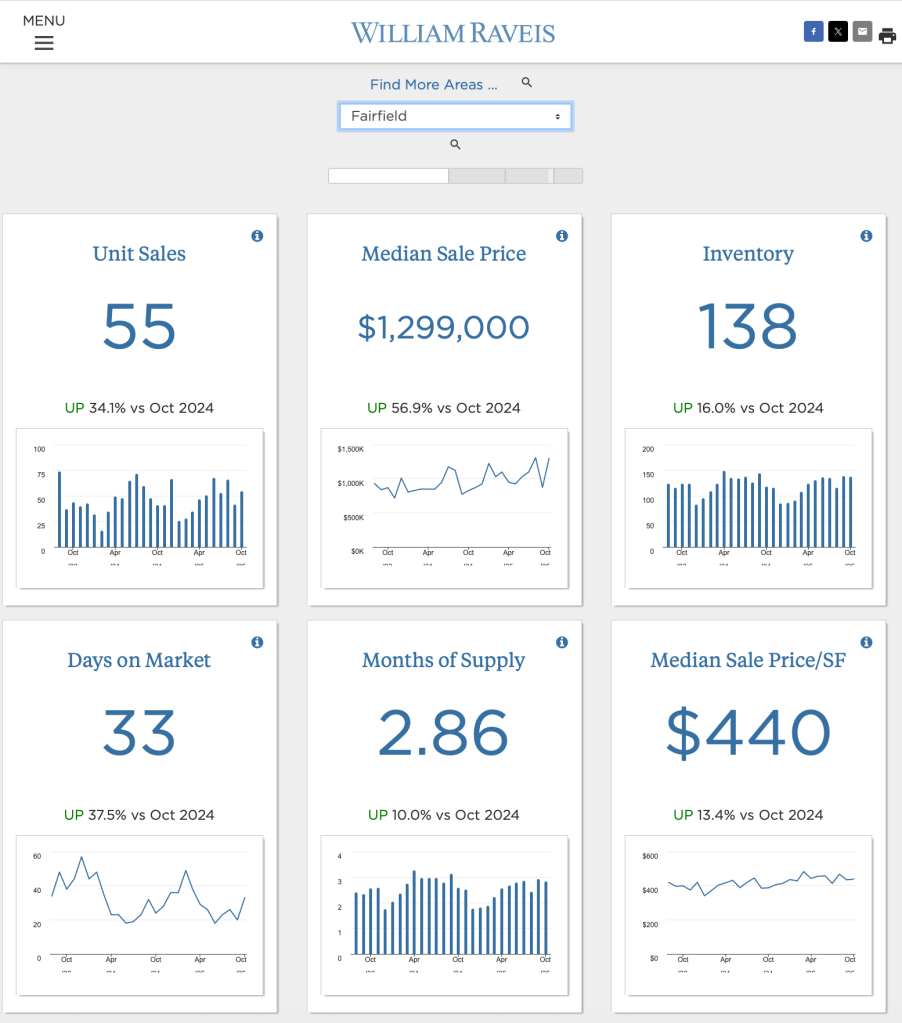
Take a look at this summary of the Fairfield and Westport CT single-family markets this October compared to a year ago and the opportunities ahead. Spoiler alert: The broad theme is “UP“!
Key Takeaways from October2025 🧐
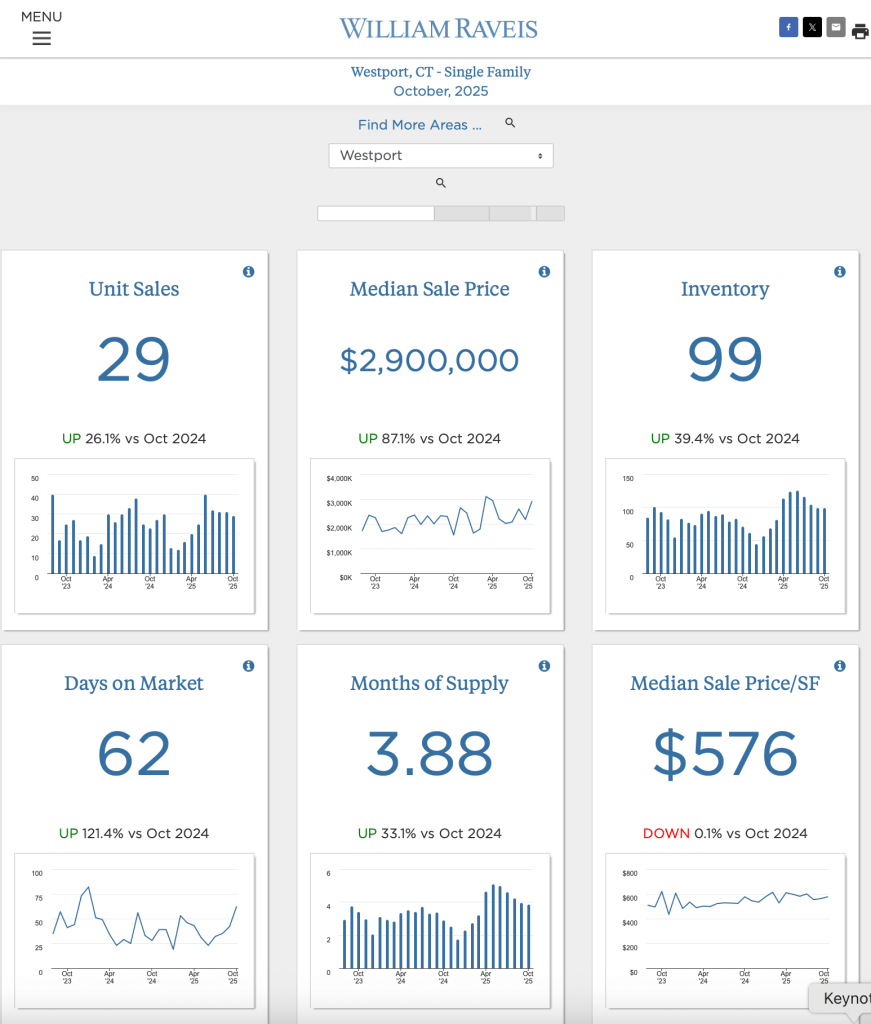
In Fairfield sales were up. Inventory, the months of supply and market time were up. The median sale price and price per square foot were up too. Ninety-five percent of the homes sold for at least 95% of asking with an average sale price of 102% of asking.
Westport
Likewise, in Westport sales were up. Inventory, the months of supply, and market time were up. The median sale price also jumped up a whopping 87% from last October due to a number of very high-priced sales. However, just 72% of homes sold for 95% or more of the asking price with an average sale price of 100% of list.
The markets in Fairfield and Westport were dynamic with stronger buyer and seller activity than a year ago. Many sellers still enjoyed top sale prices, while many buyers were able to negotiate prices below the list price.
The Opportunities… 🥳
Rates are down with the 30-year fixed conforming mortgage ratedown to 6.125% and the jumbo rate at 5.750% at the time this was written. William Raveis Mortgage also offers adjustable rate mortgages (ARMs) with rates in the 5s. This means affordability is up for those considering a mortgage!
Sellers entering the market now have a continued competitive advantage due to appreciation and relatively low inventory. If you are also looking to buy but worry about finding your new home, you have options. You can list your home “subject to finding suitable housing”, sell and rent back until you’re ready to move, negotiate a long closing, or buy first with a bridge loan. Talk to your agent about a strategy that works best for you. Listing your house now will enable you to be a competitive buyer while providing more choices for everyone shopping for a new home!
Buyers, despite some continued multiple offer situations, your options and negotiating power are UP now with increased inventory and longer market times. If you see something you like, be prepared to submit a complete and competitive offer including your pre-approval or proof of funds. Now’s the time to make your offer, as sellers are likely motivated to close before the holidays. You may have some great leverage for a win-win deal!
Reach out to your agent if you wish to be grateful for a new home this season! 🍂 🏡
More Action Items
Sign up for updates: new listings, price changes, local market insights, and mortgage rates.
Why Selling a Vacant Home in Connecticut Can Be Challenging
You’ve already packed up and moved — maybe across town, maybe across the country — but your Connecticut home is still sitting empty. Selling a vacant property can feel like a full-time job from afar: keeping it show-ready, managing utilities, and worrying about what’s happening when you’re not there. The good news? With the right strategy, you can sell quickly and for top dollar, even after you’ve moved out. I’m Linda Raymond, a Fairfield and Westport Realtor who helps homeowners navigate exactly this situation — here’s what really works when you’re selling a home that’s no longer lived in.
Top Mistakes Sellers Make After Moving Out
Underestimating risks and holding costs -Leaving a home vacant while it’s on the market may feel like a clean break, but the hidden costs can stack fast. You’re still on the hook for insurance, property tax, maintenance, and utilities — all while the asset isn’t actively serving you. Check with your insurance carrier about vacancy coverage. Worse, a home that sits empty often looks the part. Overgrown lawns, stale interiors, or small signs of neglect can chip away at perceived value. Not to mention the psychological signal it sends: buyers may assume there’s urgency or desperation behind a vacant listing. It helps to understand exactlywhat vacant homes risk losing value over — from security concerns to emotional detachment — and get proactive about countering those perceptions.
Appliances are often dealbreakers when they break — especially for first-time buyers who are already stretching their budgets. Offering a home warranty that covers appliances upfront can smooth the transaction. These warranties can protect your sale from inspection objections, and build peace of mind. It’s an invisible safety net that makes your listing feel more complete and your negotiation posture stronger. You can put it in place and decide whether to promote it or not. Some buyers may think it means there are known issues with the home. Alternatively, you can keep this option in your back pocket in case there is an appliance problem during inspections. Your agent can help you get a policy for the listing period and/or for the buyer.
Managing Your Home Sale from Afar: Remote Seller Tips
Don’t try to DIY your way through distance. Instead, set up a local system. Ask your agent for property manager contacts. Whether it’s a trusted friend, a paid assistant, or a professional service, what matters is predictability — who’s checking the lights, making repairs, or confirming that snow’s been shoveled. To avoid stress and surprises, create a plan that covers communication, maintenance, repairs, and emergencies. It doesn’t need to be complicated. It just needs to be complete.
Keep the Property Maintained Like You Still Live There
Even though you’re not inside, the home should behave as if you are. That means scheduling recurring cleaning, keeping the yard sharp, and checking systems regularly. HVAC units shouldn’t sit idle for long. Moisture and pests sneak in when no one’s watching. A solid rule: if you’d notice it while living there, it should be checked now. The goal is simple —preventive upkeep to avoid long‑term damage. It’s cheaper than remediation, and it signals to buyers that you cared for the space even after you left it.
Pricing Strategies for Vacant Homes in Fairfield and Westport
Vacant homes require a realistic perspective when it comes to pricing. They don’t carry the same warmth or emotional pull that furnished, lived-in properties do — which means your pricing needs to do the work your sofa used to. Especially if your property isn’t staged to the nines, it’s smart to compare selling vacant vs occupied pricing to understand how buyer expectations shift. A slightly lower price upfront can attract more buyers quickly, potentially drive competition for your listing, can save you weeks of holding costs, and can ensure you avoid the dreaded “stale listing” effect. Be realistic. Be intentional. Be timely.
How to Keep Your Empty Home Showing Its Best
Ask your agent about digital staging to draw buyers in. Even with no one inside, you can make your home feel emotionally full. Digital staging can drive positive first impressions online, 24/7. A bare room can feel cold and confusing, digital decor can make empty rooms shine. It’s not just about aesthetics — it’s about enabling the buyer to imagine themselves in the space. A digitally staged home grabs attention online, drives more in-person traffic, and creates cohesion between what buyers see and what they hope for. For sellers who’ve already moved out, it’s one of the most cost-effective perception upgrades available.
Consider minimal or full staging. Even if the photos bring people in, an empty home doesn’t just look different — it feels different. Without furniture, the emotional vibe drops, dimensions get fuzzy, people question where their dining table might go, or think a bedroom feels small. Before going fully vacant, consider the buyer’s point of view and the power of staging psychology. A little staging — even borrowed or rented — can create critical emotional connections. Furnished versus vacant impacts buyer impressions more than most sellers realize. If nothing else, leave a few anchor pieces that provide scale and comfort cues during showings.
When to Bring in a Local Realtor Who Knows Vacant Property Sales
Whether you’re near or far, success in selling your vacant home comes from anticipating home management needs and buyer perceptions of the home’s ambience, maintenance, and overall value — and solving for these before they ever walk through the door.
If you’ve moved out and are wondering how to handle your vacant home in Connecticut, don’t leave money or time on the table. A few smart steps — from presentation to pricing to proactive oversight — can make all the difference. I’ve guided many Fairfield and Westport sellers through smooth, profitable closings even while living elsewhere. If you’d like an expert set of eyes on your situation, reach out anytime — I’m happy to share what’s worked best for my clients and what will work for you.
People Also Ask… Q: How do I sell my house in Connecticut after moving out of state? A: Work with your local Realtor experienced in vacant property sales, ensure some professional staging, and maintain curb appeal and utilities for showings. Q: Is it harder to sell a vacant home in Connecticut? A: Not if it’s priced strategically, well-presented, and marketed by an agent familiar with remote sellers.
By Guest Writer, Sharon Wagner and Connecticut Realtor, Linda Raymond
I have to ask: What’s the One Thing your next home must have?
Here’s a summary of what happened last month in our Fairfield and Westport CT single-family markets compared to a year ago and the opportunities for making your next move.
✅ Get updates here for new listings, price changes, local market insights, and mortgage rates.
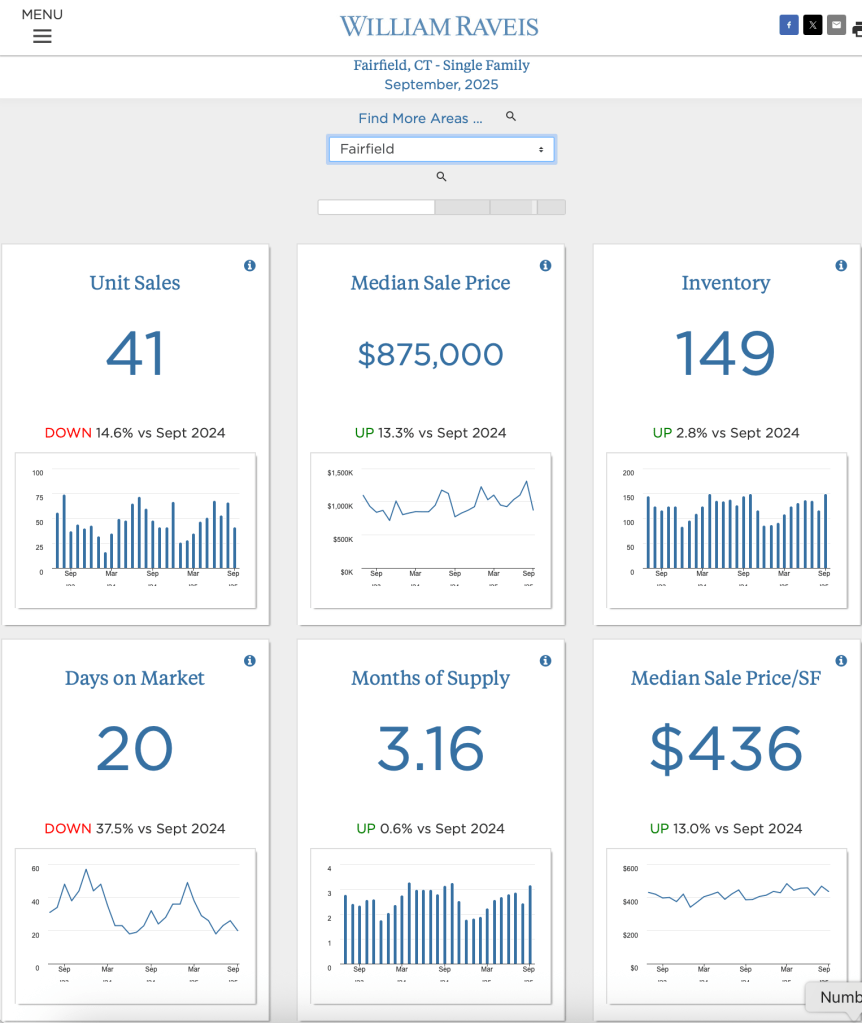
September 2025 Fairfield
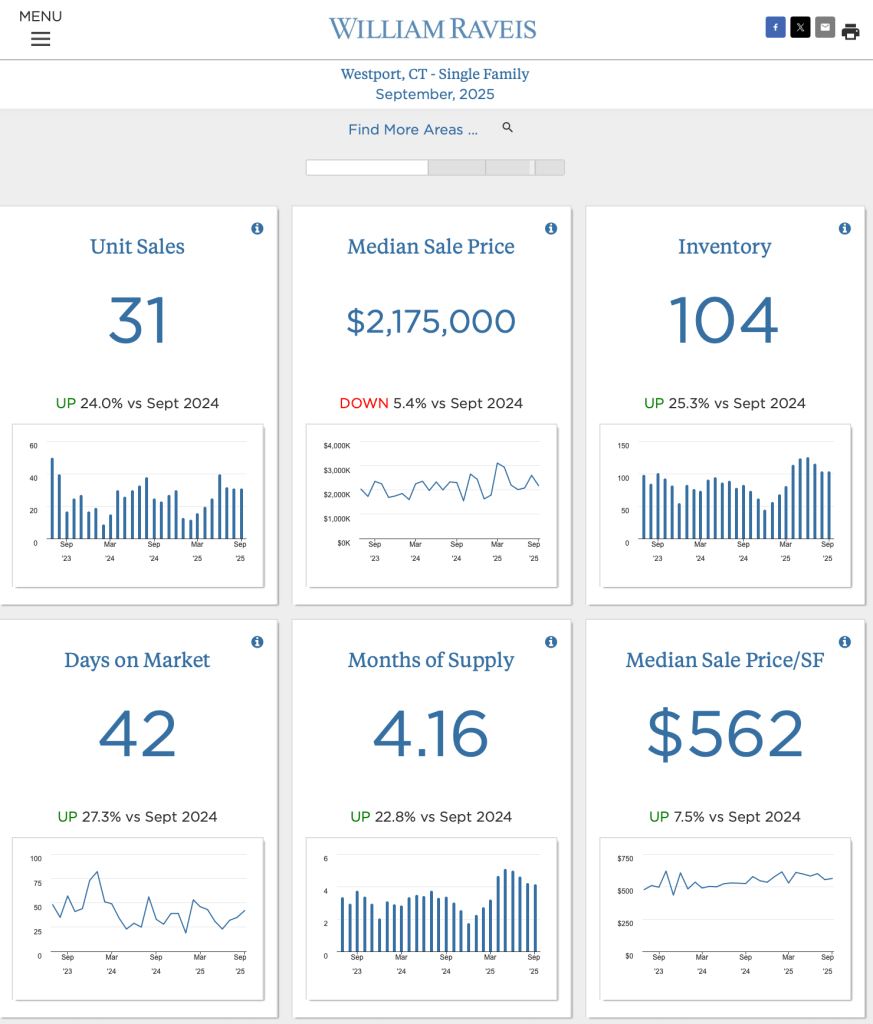
Westport
Key Takeaways from September 🧐
In Fairfield there was more inventory, more months of supply, and there were more new listings this September compared to last year. However, there were fewer sales and pending sales. For the homes that did sell, the median sale price was up, market time averaged a brisk 20 days (down from 32 last year), and sales averaged 103% of asking, compared to 99% last September. This shows that, although there was more choice for buyers, the competition for some of the listings was still fierce.
In Westport the inventory and months of supply also increased year over year, to 4.16 months of supply, where five to six months is considered a balanced market. Unit sales increased by 24 percent. However, there were fewer new listings, longer market times (averaging 42 vs 33 days), and sale prices averaged just below asking. The median sale price also dipped slightly to $2,175,000. Perhaps a more balanced market is gradually approaching.
And the Opportunities Are… 🥇
The 30-year fixed conformingmortgage rate was 6.325% and the jumbo rate just at 6.000% at the time this was written. William Raveis Mortgage also offered adjustable rate mortgages (ARM) at 5% for jumbo, and 5.750% for conforming. This improves affordability for everyone considering a mortgage!
Sellers entering the market now still have a competitive advantage due to relatively low inventory. If you are also looking to buy, you can list your home “subject to finding suitable housing” to protect yourself until you find something you love. You can also have your agent negotiate timing to coordinate your move, such as a delayed closing date.
The market is still leaning toward sellers, and listing your house will provide more choices for everyone trying to make a move! There is a nice window for sellers list their homes and buyers to get in before the holiday season shifts into high gear.
Buyers, if you see something you like, be prepared to act with a complete offer including your pre-approval or proof of funds. If you’ve been watching a listing that’s been on for a while, now’s the time to make your offer. You might have some leverage to strike a good deal!
Will you be stepping into a new home this fall? 🍂 🏡
















 Fairfield and Westport CT Real Estate Guide