

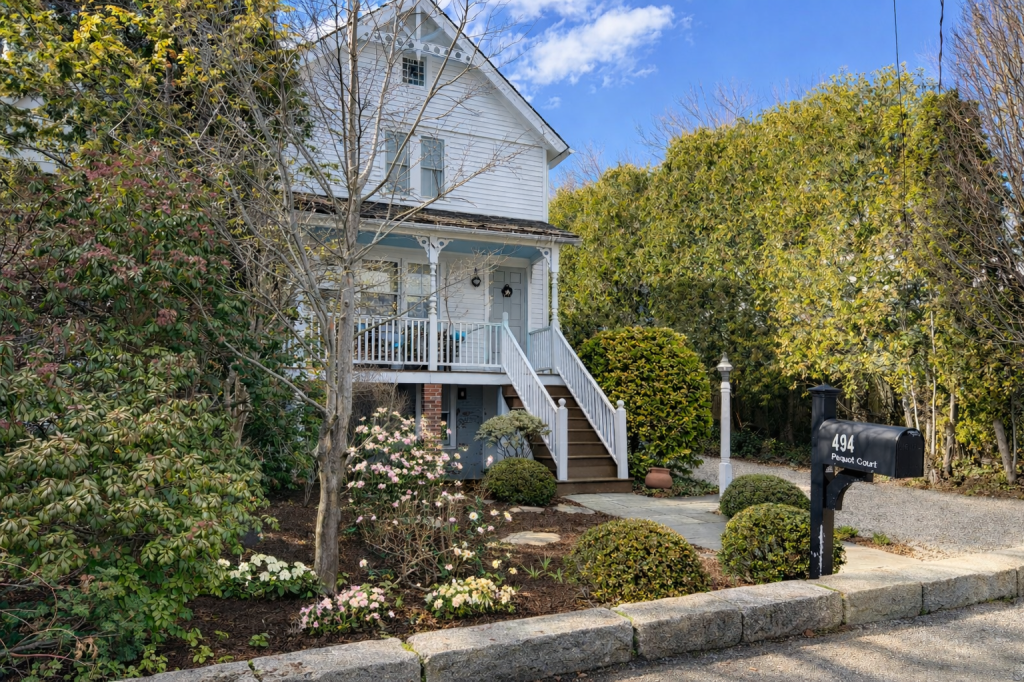
There are certain details in Southport Village that you don’t notice at first.
They don’t announce themselves like the harbor views or the stately 19th-century homes. They aren’t framed in listing photos or highlighted in brochures.
And yet—they may be one of the most authentic, enduring elements of the village.
Look down.
Along the edges of the quiet lanes, bordering gardens and gravel drives, you’ll find them:
…not flashy new countertops, but granite curbs, worn softly by time.
The Beauty Beneath Your Feet
Long before asphalt roads and modern infrastructure, New England villages relied on hand-hewn granite to define their streets.
In Southport, many of these stones still remain.
- Cut from regional quarries in the 18th and 19th centuries
- Split by hand or early tools, not machines
- Set in place to manage drainage, define carriage paths, and bring order to growing coastal communities
Over time, they’ve taken on a quiet elegance:
- Edges softened by decades of footsteps and carriage wheels
- Subtle variations in tone—silver, ash, and salt-washed gray
- Imperfections that feel less like flaws and more like fingerprints of history
These are not just curbs.
They are artifacts woven into daily life.
A Living Streetscape
One of the defining characteristics of Southport Village is its continuity—a rare sense that the past hasn’t been replaced, only gently adapted.
Even when roads are improved or utilities updated, the granite curbing is often:
- Carefully lifted
- Preserved
- And reset in place
This means that what you see today is often a blend of:
- Original 19th-century stone
- Reclaimed historic granite
- Thoughtful stewardship by the community
The result is a streetscape that feels timeless rather than restored.
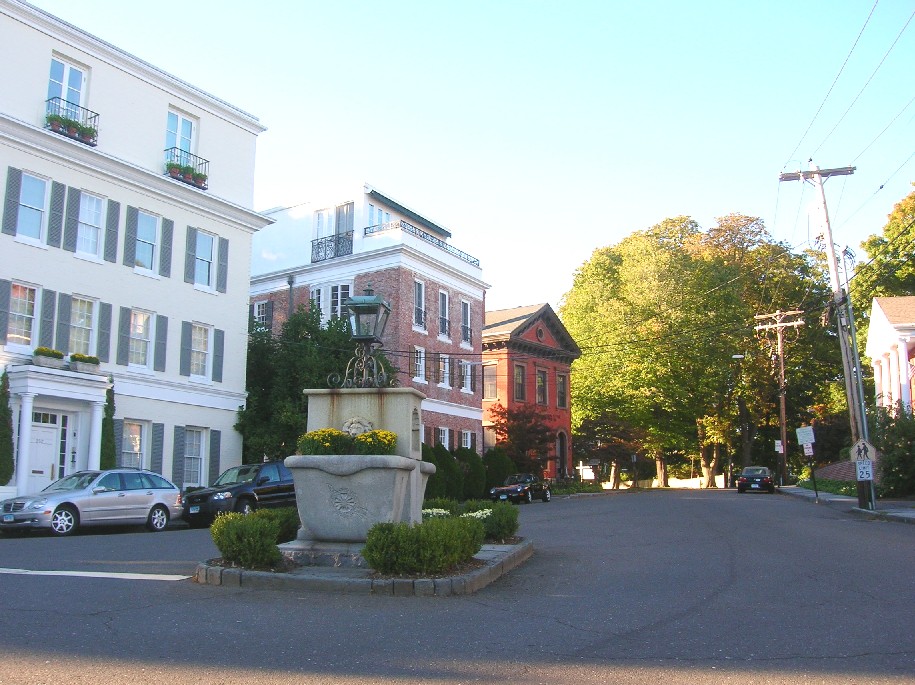
A Closer Look at 494 Pequot Court
At 494 Pequot Court, this story continues in a particularly compelling way.
Set within a quiet enclave just off Pequot Avenue, the property reflects the same layered history found throughout the village—where every detail, even at ground level, contributes to a sense of place.
Along the edge of the property, the granite curbing reveals:
- A natural split-face texture, characteristic of traditional quarrying methods
- Subtle weathering, suggesting age and exposure
- A clean, intentional alignment, indicating it has likely been carefully reset over time
This combination is especially appealing.
It offers:
- The authentic materiality of historic Southport
- With the stability and refinement of more recent stewardship
In other words, it’s not just original—it’s enduring.
Why These Details Matter to Buyers
For those drawn to Southport Village, the appeal is rarely about square footage alone.
It’s about:
- Texture
- Atmosphere
- Authenticity
Granite curbing may seem like a small detail, but it signals something much larger:
✔ A commitment to preserving historic character
✔ A neighborhood that values continuity over convenience
✔ A setting where even infrastructure reflects craftsmanship
For buyers seeking more than just a home—for those looking for a sense of place—these details resonate.
The Quiet Luxury of Authenticity
In today’s world, where so much is newly built to look old, Southport offers something different:
The real thing.
Not replicated.
Not manufactured.
But lived-in, weathered, and quietly beautiful.
And sometimes, the most compelling evidence of that isn’t in the architecture above—
—but in the stone beneath your feet.
Explore More
If you’re exploring Southport Village real estate or are curious about the history and hidden details that make this coastal enclave so special, stay tuned for more posts in this series, or consider venturing over to the vibrant Fairfield Beach Area.
Or, if you’d like a private look at 494 Pequot Court, I’d be happy to share more about the home—and the story it continues to tell.
Because in Southport, even the smallest details are part of something much bigger.
Inquire below.


 Fairfield and Westport CT Real Estate Guide
Pingback: Southport Village CT, Coming Soon: 494 Pequot Court | Fairfield and Westport CT Real Estate Guide