If you’re planning a kitchen renovation and thinking ahead to resale, you’re making a smart move — especially here along the Gold Coast in Westport and Fairfield, where thoughtful updates can set your home apart from others on the market.
And if you’re considering sustainable upgrades along the way? Even better. Today’s buyers are not only drawn to beautifully designed kitchens — they’re also looking for homes that are more efficient, environmentally friendly, and aligned with modern values.
💡 The Data: Buyers Are Asking for Energy Efficiency
According to the National Association of Realtors 2023 Sustainability Report,
63% of Realtors said promoting energy efficiency in listings is valuable.
Nearly half of all buyers are interested in sustainability and green features.
And from Zillow’s Consumer Housing Trends Report:
60% of homebuyers said they would pay more for a home with energy-efficient features — especially kitchens with updated appliances and smart design.
Younger buyers in particular are driving this trend, and they’re not just dreaming about eco-conscious living — they’re shopping for it.
🍽️ Smart, Sustainable Upgrades to Consider
As you plan your kitchen renovation, here are a few upgrades that add style, improve efficiency, and speak directly to what buyers want:
ENERGY STAR® Appliances – Efficient refrigerators, dishwashers, and microwaves that lower utility bills and appeal to buyers focused on long-term value.
LED Lighting – Energy-saving fixtures that modernize your space and reduce consumption.
Low-Flow Faucets – Subtle, stylish upgrades that conserve water and increase appeal.
Sustainable Surfaces – Recycled glass countertops, bamboo flooring, or FSC-certified cabinetry offer durability with eco-conscious flair.
Better Insulation & Ventilation – Ideal for coastal homes where climate control is key to comfort and energy use.
🏡 How I Maximize the Value of Green Features in Your Sale
When it comes time to sell, I make sure these eco-friendly choices don’t go unnoticed. Here’s how I bring their value front and center:
✅ Feature Highlighting – I call out sustainable elements in the MLS listing, brochures, social posts, and property descriptions with attention-grabbing language and targeted keywords.
✅ Energy-Efficiency Messaging – I tie the green features to long-term savings and buyer peace of mind, which resonates with both cost-conscious and environmentally aware shoppers.
✅ Appeal to the Modern Buyer – I tailor marketing to appeal to today’s buyer — especially Millennials and Gen Z — who are actively seeking homes that reflect their values.
✅ Lifestyle Framing – It’s not just about efficiency — it’s about lifestyle. I show how your kitchen supports wellness, smarter living, and even resale value down the line.
✨ In a Beachside Home, Efficiency Matters Even More
Homes by the water, like those along the Fairfield County shoreline, can come with higher exposure to weather and energy use. A well-designed, sustainable kitchen adds functional and emotional value — something I highlight strategically in every showing and piece of marketing.
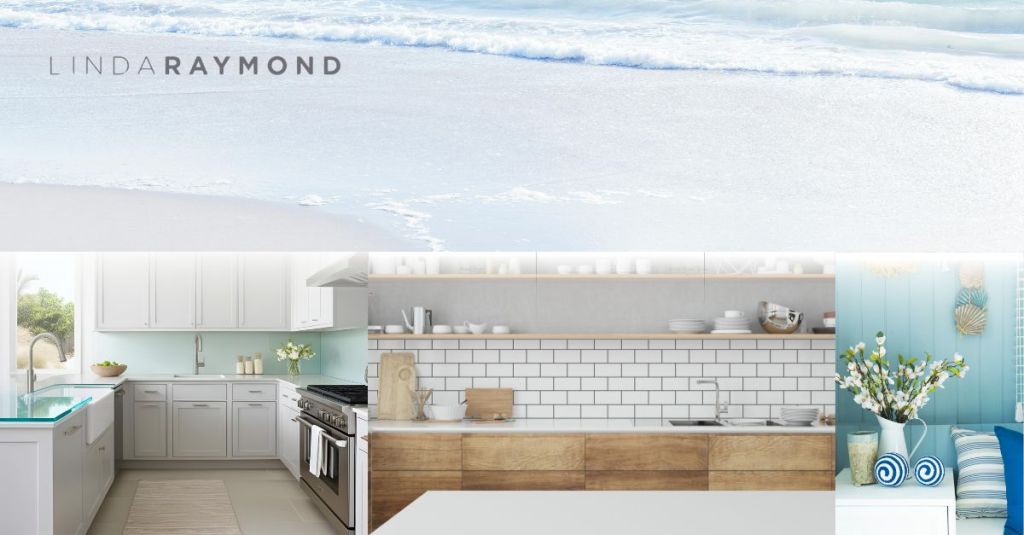
📸 Picture this Concept: Eco-Chic Coastal Kitchen
Style: Modern coastal with clean lines and a light, airy feel
Cabinetry: Sleek white or soft matte gray shaker cabinets
Countertops: Recycled glass or light quartz surfaces
Appliances: Stainless steel, ENERGY STAR® rated (subtle labeling optional)
Lighting: Minimalist LED pendant lights (think matte black or brushed nickel)
Flooring: Bamboo, cork, or warm-toned sustainable wood
Natural elements:
A small potted herb garden on the windowsill or counter
Bowl of lemons or a vase with greenery
Large window letting in natural light
Beachy accents:
Subtle sea glass tones (light blue or soft green) in backsplash or decor
Coastal artwork or a driftwood tray
Let’s Position Your Kitchen for the Highest Return
If you’re making eco-friendly upgrades with an eye toward a future sale, I can help you maximize their impact when the time comes to list. When marketed the right way, a green kitchen does more than save energy — it attracts the right buyer, builds value, and helps you stand out in a competitive market.
Call to Action: 📩 Have questions about which features buyers value most — and how to spotlight them when you sell? Let’s connect. I’d love to help you position your home for top dollar.
You probably don’t have to worry about replacing your driveway anytime soon.
But if you did….would you ever think of replacing it with something other than asphalt?
It doesn’t occur to most of us to seek out “green” alternatives. Yet, there are a growing array of options for ways to preserve our environment and reduce carbon emissions that cause dangerous global warming and increasingly extreme and destructive weather events.
“Asphalt and concrete are old school bad boys”, -Stephen Treffinger in an article from MYND, a real estate investing firm.
Everyone has asphalt driveways. What’s wrong with asphalt?
Asphalt and concrete are not sustainable. The main component of asphalt is petroleum, which is a limited resource found beneath the earth’s surface. The process of extracting it consumes large amounts of energy and also disrupts the surrounding environment. In fact the extraction process is thought to be the cause of earthquakes in Oklahoma according to Aexel Corporation. The asphalt and its production release dangerous and toxic carbon emissions and VOCs (Volatile Organic Compounds) into the atmosphere. Blacktop then absorbs and re-emits the sun’s heat back into the air causing higher temperatures, whereas natural landscape materials do not. And last, but not least, the pavement (along with all impermeable surfaces) threatens our water supply by preventing natural filtration of water through the ground. Instead it causes water contaminated by the asphalt and other debris to run-off the hard surface and mix with the sewage drainage system before ending up back into our rivers.
The overriding philosophy of GI is to emulate the way natural systems manage water. For instance, runoff can be thought of as a “waste” of water in a natural landscape. A natural landscape tends to conserve water; it is a natural cooling system, a natural material/food delivery system, a cleansing system, and a cell structural maintenance system among other things. The water cycle is nature’s way of collecting, storing, and timing the redistribution of water across landscapes.
Runoff is water that is not captured by upland landscapes for their needs.
GI describes the processes of using various techniques that seek to mimic the soil’s natural ability to infiltrate runoff. This is important as climate change projections for New England generally predict warmer temperatures with increasingly strong storms and high precipitation events. This can cause the seemingly paradoxical effects of increased drought from the high temperatures while also increasing the risk of flooding from the strong storm events. GI can help negate both consequences by taking water that would otherwise runoff, swelling brooks and rivers, and instead allowing that water to infiltrate into the ground or be captured and used directly.
Is green the new black? 🌱
Asphalt recycling and more porous alternatives can be used until better solutions become readily available. But here are some methods for greening our driveways for a more eco-conscious future, shared from MYND.
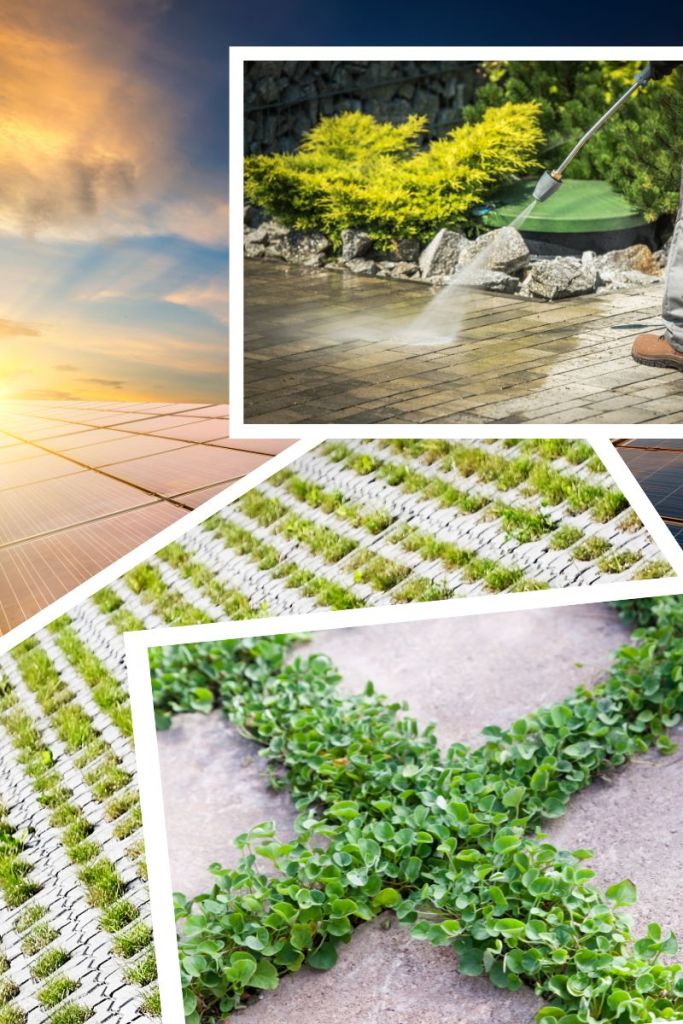
Gravel – Pros: It is inexpensive at $1 to $2 per square foot, can be locally sourced, and is very porous, making it a highly eco-friendly, green option. Cons: It could pose a challenge to plowing in the winter.
Seashells 🐚 – Pros: The shells can be collected without harming the shoreline and processed into a porous and durable mix. It is low-cost at under $1 per square foot. Shells over time will breakdown and provide nutrients to the soil and area plants. Shells are safe for the environment and add a beach flair to your home. Cons: This alternative is not available in all areas, and the driveway is not comfortable to walk on barefoot.
Permeable paver system 💧- Pros: This approach has more conventional look with solid pavers that allow water to drain down between them. It uses clear crushed stone between the pavers and a layer underneath that’s about a foot deep. This allows water to filter into the ground naturally instead of running over the surface into the city drainage system. Cons: These are pricier at $15 to $30 per square foot.
Grass 🦠 – Pros: A structured grid buried below the ground’s surface provides a supportive structure for grass giving it the strength to function as a driveway. This allows water to filter through the ground just like the rest of your lawn. GD Grass System is a provider. Cons: There would not be a visual distinction between the grass yard and driveway unless you create a border with additional landscaping.
“Solar Freakin Roadways!!!” 👽- Yes, you read this right! There is a company in Idaho called Solar Roadways that makes solar road panels [<= CLICK THAT LINK. THE 7-MINUTE VIDEO IS ENTERTAINING, ENLIGHTENING AND A MUST-SEE!]. Pros: This is an amazing technology that uses sustainable materials to make, not just solar, but SMART road panels. They are modular panels that fit together to prevent cracking. They generate energy, produce an ROI, charge electric vehicles, enable underground wiring, provide traction, heat up to prevent ice and snow accumulation, light up for a festive display, can send emergency alerts, and can be programmed on demand to create range of light patterns or sports quarts, and yes, they provide a place to park! Cons: As an emerging technology, they are not cheap at the moment, but the price will come down.
Hemp 🪴- Pros: Light-weight bricks can be created from the strong inner fibers of hemp that can last for years. The lighter weight makes transporting them less expensive and less impactful on the environment. The added bonus is that they absorb carbon from the atmosphere just like trees. Cons: Hemp might not be legal in all areas.
Fungi 🍄🟫 – Pros: This is another evolving technology where mushrooms can actually be used to make strong bricks! Fungal threads, or mycelium, are introduced to a substrate which they consume, digest, and convert into a strong solid mass. The mycelium basically act like “glue that binds together different natural particles” says Critical Concrete. The benefits to mycelium are that it can create material that’s stronger than concrete, can absorb more heat than fiberglass, is fire-proof, non-toxic, very light weight when dry, and can last up to 20 years if maintained in favorable conditions. Cons: the mycelium is water and mold resistant initially but gradually loses this capacity over time. The key is finding ways to keep it in stable conditions to prevent it from decomposing.
I hope this article sparked some awareness and intrigue 🤩 about green alternatives that support sustainability. The more we learn about the ways to protect our environment, the more focused on its importance we may become, and the more we can take action for a greener 💚 and more sustainable 🔮 future.
Committing to highly ambitious New Year’s resolutions may be as American as apple pie, but then so too is the tendency to call it quits before they’ve been realized, with nearly one in four of us jumping ship within the first week alone. So we’ve put together a list of resolutions that come with such a high return on your investment (ROI), even if you only hit one, you’ll be in pretty good shape.
Better yet, nearly all of these New Year’s resolutions come with rebates or tax credits via the Inflation Reduction Act (IRA) of 2022, so you really won’t have an excuse to not get started.
Here’s to a happy, healthy 2025!
1. Lower Cost, Good ROI: Smart Thermostats
If you’re anything like the average U.S. household, nearly half of your annual home energy expenditures go toward heating and cooling, which nets out to more than $900 each year. What if you could pay less in the year ahead?
One simple solution may help you do so: installing a smart thermostat.
But what do these smart thermostats even do, exactly? Like most of today’s latest-and-greatest smart home tech, smart thermostats bridge the physical and digital, enabling you to do more than just, say, adjust the temperature in your house. Instead, these thermostats use your input and preferences as a starting point, then automate and optimize your home’s energy settings from there, with the goal of striking an ideal balance between sustainability, on the one hand, and comfort, on the other.
Just be sure to pick up a model that has earned the ENERGY STAR® label: These smart thermostats are powered by algorithms based on 12 months or more of real-world energy-usage data in similar homes, for starters. Rigorously and independently certified and tested, these models must be able to demonstrate efficacy regardless of climate, too. Finally, studies show that these smart thermostats — and these smart thermostats alone — reduce household energy bills by around 8% on average. Adopted at scale, what’s more, smart thermostats might curb U.S. carbon emissions by as much as 18 billion pounds annually.
So getting a new, smart thermostat for your home in the new year is a smart move for many reasons. It’s also easy to do, and local utilities may even offer rebates when you buy (check Green Door for those). Note that in some cases, depending on how your heating and cooling systems are wired, you may need to have a qualified electrician on hand.
2. Medium Cost, Great ROI: Attic Insulation and Air Sealing
Best-in-class insulation for attics is a key ingredient of most high-performing homes, for reasons that are fairly straightforward to explain.
As you probably remember from high school science class, heat moves from warmer to cooler areas, which can result in warm air escaping through un- or under-insulated areas in your home. During the warmer months, the opposite is true, with equally undesirable results: Hot air streams in through gaps in your insulation, thereby pushing cold air out of your home, decreasing the efficacy of air conditioners and increasing home energy costs in turn.
Both scenarios can result in needlessly high energy bills, which is why, according to the EPA, you stand to save 15% on heating and cooling costs — or around 11% on overall energy costs — by adding insulation and air sealing your home. This is also one of the reasons why, within our scoring system at Pearl, attic insulation earns a relatively high number of points toward a Silver, Gold, or Platinum Pearl Certification — it’s an investment you ideally make once that has a huge impact for years to come. Plus, you can save on installation costs with rebates and tax credits under the IRA and other programs.
3. Higher Cost, Excellent ROI: Energy-Efficient Windows
After making initial headway with the addition of smart thermostats and attic insulation, the next logical step is window replacements. After all, these investments further insulate your building shell and provide a level of protection from extreme weather events. They can also pay for themselves rather quickly.
While you’re at it, just be sure to dial in to the specific needs of your home. And be sure to look for rebates and tax credits in Green Door — there’s opportunity to save significantly, particularly if you’re ordering at volume.
Finally, use the Green Door app to identify a local solar Pearl Network Contractor to help you calculate potential cost savings and arrive at the right budget. Only Pearl Network Contractors can use the Pearl Solar Equity Calculator® to calculate a 20-year discounted cash flow using certified contractor data, National Renewable Energy Laboratory (NREL) software, and Freddie Mac’s 30-year mortgage rate. With the report you’ll better understand the cost, savings, and value of your solar investment.
5. Higher Cost, Excellent ROI Resolution: Electric Vehicles
The future of U.S. transportation is, in many respects, already here in the form of electric vehicles (EVs), with huge implications for not only the future of greenhouse gas emissions but the health and well-being of your pocketbook in the present day.
For starters, consider the near-term gains: Going anywhere in an EV costs as little as $0.84 per gallon-equivalent, which is fully 66% less than the $2.50-per-gallon average you would expect to pay in a carbon-emitting alternative. So everyjourney should confer some measure of cost savings in your new vehicle — and by putting the “EV” in “every,” you’ll be helping to offset the cost of that investment right off the bat.
Of course, not everyone will be realistically in the market for a vehicle upgrade in 2025, which is why we saved this sustainability investment for last. Still, you shouldn’t overlook the potential upside of doing so down the road. It’s the one performance upgrade that has the power to literally take you to new places each and every day — and to transform your experience of transport in the year ahead, too.
Improving your home’s energy efficiency, shrinking your overall carbon footprint, and realizing significant cost savings over the near and long term are attainable resolutions for every homeowner in 2025 — especially as states roll out their IRA rebates programs. Just be sure to take it one step at a time and to prioritize projects based on your financial goals. That’ll better position you for success, shorten your timeline to impact, and ensure you see the expected ROI.
As we step into the New Year, I’m thrilled to share a fresh focus for homeowners: making smart, trendsetting, and sustainable improvements that boost your home’s performance, comfort, energy savings, and value. Whether you’re staying put or planning to sell, there’s never been a better time to invest in your home’s performance—and I’m here to help.
Take Advantage of Tax Credits and Rebates
Did you know the Inflation Reduction Act of 2022 expanded federal tax credits and state rebates for energy-efficient home improvements? From solar panels to new windows and home energy audits, there’s a wealth of incentives available to help offset costs. Be sure to consult your accountant for the necessary forms to claim these benefits on your tax return.
Learn more about these credits on the IRS website.
Visit EnergizeCT for rebates, EnergyStar appliance info, and energy audits.
What Is Pearl Certification, and Why Does It Matter?
I’m proud to share the benefits of Pearl Certification to homeowners like you in our community. Pearl Certification is a national standard for existing high-performing homes, recognizing upgrades that make your home healthier, more comfortable, and energy-efficient. From insulation, to solar panels and smart thermostats, these improvements not only reduce your energy bills but also increase your home’s market value. In fact, studies show that Pearl-certified homes sell for an average of 5% more than non-certified homes.
How You Get Your Home Pearl-Certified
Here’s how it works:
Track Your Improvements with Pearl’s Green Door App: Start by recording your home’s energy-efficient upgrades on the free Green Door app, powered by Pearl Certification. This tool helps you organize and document improvements like solar panels, insulation, and high-efficiency HVAC systems.
Submit for Certification: Once you’re ready, you can submit your improvement records through the app for review by the Pearl team. For a nominal fee, Pearl will issue a formal certification and report that showcases your home’s high-performance features.
Leverage Expert Marketing Tools: For homeowners planning to sell, I have exclusive access to a suite of marketing materials designed to highlight your home’s upgrades. These include:
A certification badge for platforms like Zillow.
An equity calculator to show the added value of solar and other upgrades.
An appraiser’s addendum to ensure your home’s improvements are accurately valued.
Letters to lenders and buyers’ agents emphasizing your home’s high-performance features.
My Commitment to Sustainability
Beyond Pearl Certification, I’ve completed the National Association of Realtors’ course, Intro to Sustainability & Resiliency: What Realtors Need to Know, and am working on NAR’s prestigious Green Designation. These certifications reflect my dedication to staying at the forefront of sustainability and resilience in real estate. Here are five high-value upgrades you can make in 2025! Request to be included in my monthly e-newsletter, Word on the Street, where I’ll share more tips and insights on this topic.
Let’s Make Your Home Shine
Whether you’re upgrading your home for your own enjoyment or preparing to list it, investing in energy efficiency is a win-win. As your trusted real estate advisor and Pearl-Certified Agent, I’m here to guide you through the process, connect you with resources, and ensure you maximize your home’s potential.
Ready to get started? Let’s talk about your goals and create a plan to achieve them. Together, we can boost your home’s performance, comfort, energy savings, ‘tech savvy’, and market value, while contributing a broader, more critical charge- a more sustainable and resilient environment.
The holidays are a time of joy, connection, and giving—but they can also create a mountain of waste. According to Julia Skylar at SierraClub.org, Americans spent a staggering $12.7 billion on wrapping paper in 2017 alone, much of which ended up in landfills. Wrapping paper often contains glitter (a microplastic!) and bright dyes, making it non-recyclable. Yet many people add wrapping paper to their recyclable bin and unknowingly contaminate all their recyclable items that then need to go to the landfill.
There’s a better way to celebrate: wrapping your gifts in fabric!🧣This practice, inspired by the Japanese tradition of furoshiki, not only brings an elegant and thoughtful touch to your gifts but also helps cut down on holiday waste. Here are five compelling reasons to embrace fabric wrapping this season:
1. Eco-Friendly and Sustainable 🍃
Fabric wrapping is reusable, reducing the need for single-use paper and cutting down on waste. You can use the same beautiful cloth year after year, keeping materials out of landfills and sparing trees in the process. Plus, it aligns perfectly with a greener lifestyle, making your holiday celebrations more environmentally conscious.
2. Adds a Unique and Personal Touch 🤗
Unlike mass-produced wrapping paper, fabric wrapping lets you infuse personality into every gift. Choose patterns and textures that suit the recipient’s style, from festive plaids to chic silks. It’s not just a wrapper; it’s part of the gift itself—an elegant keepsake your loved ones will treasure.
3. Cost-Effective Over Time 💰
While fabric may cost a little more upfront, it’s a one-time investment. By reusing cloth each year, you’ll save money in the long run. Plus, you can utilize items you already have like scarves, bandanas, or thrifted textiles, making this an affordable and sustainable option.
4. Inspires Creativity and Conversation 🌟
Fabric wrapping invites creativity! Learn different folding techniques, tie intricate knots, or embellish with natural elements like pinecones and sprigs of greenery. Your stunningly wrapped gifts will spark admiration and might even inspire others to adopt this eco-friendly tradition.
5. Rooted in Tradition and Meaning 🌝
The Japanese tradition of furoshiki dates back centuries, emphasizing thoughtfulness and respect for both the gift and the environment. Julia Skylar’s wrote, “The Japanese word Mottainai means it’s a shame for something to go to waste without having made use of its potential in full…The cloths themselves then become part of the gift—you give one away and get a different one in return. Making use of full potential, as it were.” By incorporating this practice into your holiday celebrations, you’re not just giving a gift—you’re sharing a story and a deeper connection to cultural heritage.
How to Get Started with Fabric Wrapping
Ready to give fabric wrapping a try? Here’s how:
💡Choose Your Fabric: Repurpose scarves or cloth napkins. Look for festive colors and patterns.
💝 Add Decorative Touches: Use ribbon, twine, or natural accents to complete the look.
📣 Spread the Word: Share your creations on social media and inspire your friends and family to join in!
A Holiday Tradition Worth Unwrapping
This year, give your gifts a little more meaning and a lot less waste. By adopting fabric wrapping, you’re making a festive statement that’s as good for the planet as it is for the people you love. Let’s make this holiday season a little brighter and a lot greener, one beautiful wrap at a time. 💫








 Fairfield and Westport CT Real Estate Guide