

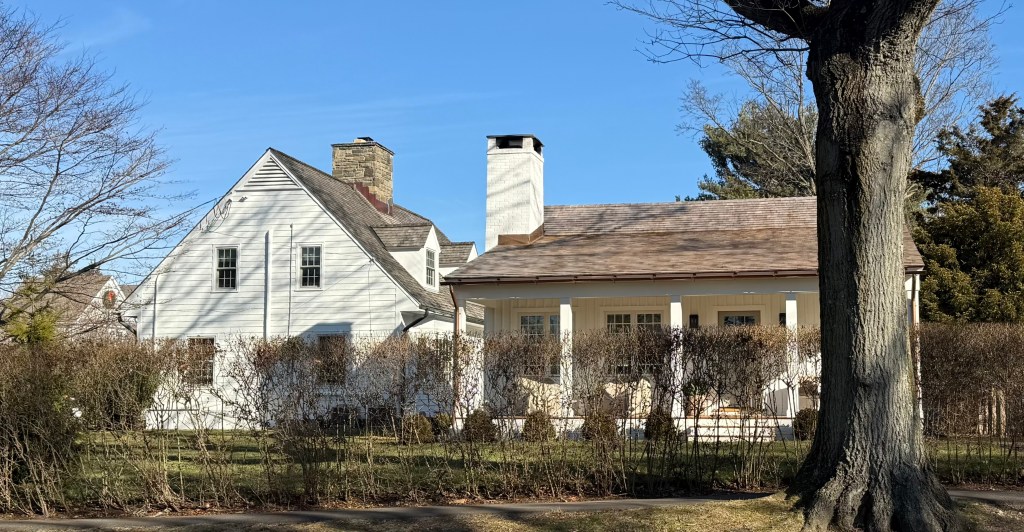
Such a small space, so many solutions!
If only I had a nearby home office that could double as a guest space…
I want my parents to downsize and live near us, but there just aren’t many options….
We need a smart retirement plan that reduces net living expenses and allows us to travel!
I wish we had an income-producing opportunity on our existing property…
What is an ADU?
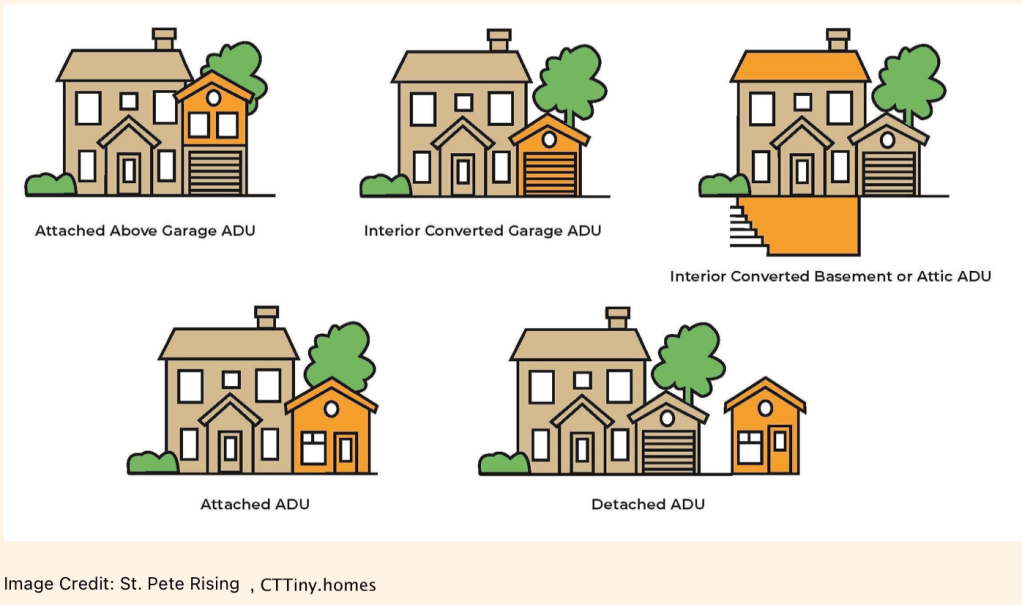
An ADU is a permanent living space that sits on the property of an existing home and includes its own entrance, sleeping quarters, a bathroom, and a parking space. It can be attached, detached, or even within the existing home. The ADU shares utility connections from the main house and is a fixed structure that is subject to all local zoning and permitting regulations. It can be as small as under 300 square feet or as large as around 1,000 square feet or more, depending on the town regulations. ADUs are permanent residences, unlike mobile homes or tiny homes, that are temporary in nature.
Cool Features
State of the art ADU construction emphasizes sustainability, accessibility, clever design, and excellent use of space. Some even have basements as a relatively inexpensive way to add utility within the footprint.
Accessibility features may include an elevator, barrier-free shower access (walk or roll right in!), shower grab bars, and easy handles in the kitchen.
Solar panels and insulated panel construction are examples of sustainability features
To maximize space, hanging toilets are often used, where much of the unit sits behind the wall. A spiral stair case or mini elevator can be great space-savers, and rooms with Murphy beds enable multi-purpose use. A design that allows for ample natural light is key in maximizing the feeling of spaciousness.
What Are the Benefits of an ADU?
Referred to as “the perfect housing solution” by expert and author of several books on the subject, Sheri Khoones, ADUs can serve many purposes. They can be a great solution, for blended families, adult children, live-in care-givers, vacation space, guests, office space, aging in place near family, earning rental income, and adding value to your property.
How Long Does it Take to Add an ADU?
You are essentially building a home, though small, so all of the same steps apply. These include a survey, feasibility determination, site work, permitting and approval process, design, material orders, utility connections, and inspections. It can take three to six months for the materials to arrive after town approvals. Therefore, the timing can range from six to 12 months.
How Much Does it Cost?
The cost can range from $250,000 to $450,000 for a detached ADU in Fairfield County. The key variables are size, whether it’s attached or detached, the site work, utility requirements, building methods, such as pre-fabricated or not, customization, and finishes. Other areas in Connecticut may cost less. A converted garage would also cost less.
Where Can I Learn More?
=> Construction – Peragallo Construction has a comprehensive guide to ADUs in Connecticut.
=> Inspiration – For more information and inspiration about ADUs in Connecticut and across the country, local author, Sheri Koones has written a number of books.
=> Town Regulations
Zoning regulations vary by town, and ADUs fall under the Affordable Housing department. CoThese are some of the key regulations for ADUs in Fairfield:
- Ownership: The principal owner must occupy either the main house or the ADU.
- Size: The ADU cannot exceed 40% of the floor area of the existing house or 1,500 square feet, whichever is less.
- Attached: An ADU must be attached to the primary residence in R-2, A, B, and C zones, unless a variance is approved.
- Detached: An ADU can be detached in AAA, AA, and R-3 zones.
- Occupancy: Maximum of 2 people for standard ADUs, or 3 people if designated as affordable housing.
- Parking: At least one off-street parking space is required.
- Rental Period: Units cannot be rented for less than 60 consecutive days.
- Design & Location: Detached or attached ADUs are allowed, including garage conversions.
- Approval Process: The Town Plan and Zoning and Health Departments must approve all projects, which often includes submitting an A-2 survey.
- Conforming: Lots must be conforming, or a variance would be needed.
- Affordable Housing: ADUs can qualify for affordable housing subject to town and Connecticut 8-30g regulations.
The links below provide more information on zoning regulations in nearby towns and how to proceed if you want to add an accessory apartment to your home.
Fairfield Q & A
Fairfield Planning and Zoning Regulations (page 62)
Westport
Weston
Norwalk
Stamford
Contact me if you are looking to buy or sell a property with an accessory dwelling unit or the potential to add one!



#ADU
#AccessoryDwellingUnit
#ADULiving
#ADUDesign
#ADUConstruction
#BackyardCottage
#InLawSuite
#GrannyFlat
#RealEstateTips
#HomeImprovement
#HomeRenovation
#HousingSolutions
#SmartHomeInvestment
#RentalIncome
#MultigenerationalLiving
#ConnecticutRealEstate
#WestportCT
#FairfieldCountyRealEstate

 Fairfield and Westport CT Real Estate Guide
Pingback: FAIRFIELD BEACH GUIDE | Fairfield and Westport CT Real Estate Guide